
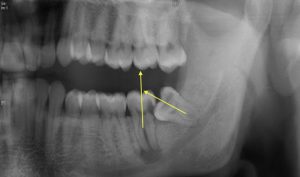
Impacted teeth are one of the most common dental issues during adolescence and early adulthood. If left untreated, they can cause pain, infection, and even damage to neighboring teeth. An impacted tooth is a tooth that has failed to emerge in its natural position in the mouth for various reasons. The most common type of impacted tooth is the lower wisdom tooth.
If you are looking for detailed information on impacted tooth surgery, causes, complications, and the best time for extraction, this article covers all the professional insights.
🦷 What is an Impacted Tooth?
An impacted tooth (Impacted Tooth) is a tooth whose natural eruption path has been blocked, preventing it from appearing in the mouth. Common causes include:
- Insufficient space in the jaw
- Incorrect tooth eruption direction
- Bone or dental obstacles
- Genetic or hereditary factors
- Cysts or tumors blocking the eruption path
📉 Complications of Leaving an Impacted Tooth Untreated
If an impacted tooth remains in the jaw, it can lead to serious issues such as:
- Intermittent or chronic jaw pain
- Gum infection or pericoronitis around the impacted tooth
- Decay of adjacent teeth
- Misalignment or tilting of other teeth
- Cyst or tumor formation in the jaw area
- Persistent bad breath and chronic gum swelling
📍 Most Common Impacted Teeth
| Tooth Type | Prevalence | Description |
|---|---|---|
| Lower Wisdom Tooth | Very common | Often lacks sufficient space to erupt |
| Upper Canine | Relatively common | Impaction may cause displacement of other teeth |
| Premolars | Less common | Usually caused by genetic factors |
🔪 How is Impacted Tooth Surgery Performed?
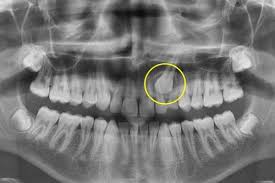
If the impacted tooth cannot erupt naturally, the best treatment is surgical removal by a periodontist. The procedure generally involves the following steps:
- Examination and radiographic imaging (OPG or CBCT)
- Local anesthesia in the surgical area
- Incision of the gum to access the impacted tooth
- Extraction of the tooth and cleaning of the site
- Suturing the surgical area
- Post-operative care instructions
⏳ Best Age for Impacted Tooth Surgery
The optimal age for removing impacted wisdom teeth is before 30 years old. Reasons include:
- More flexible jawbone
- Faster and more complete healing
- Reduced risk of residual defects or scarring
- Fewer post-surgical complications
For individuals over 30, surgery may be slightly more challenging and bone healing slower.
Comparison Table: Impacted Tooth Surgery Before and After Age 30
| Feature | Before 30 | After 30 |
|---|---|---|
| Jawbone Flexibility | High | Lower |
| Recovery Speed | Fast | Slower |
| Residual Scarring Risk | Low | Higher |
| Post-Surgical Complications | Fewer | More |
| Professional Recommendation | Highly suitable | With caution and additional evaluation |
❓ Frequently Asked Questions
1. Does an impacted wisdom tooth always need extraction?
Yes, if there is insufficient space for eruption or if it causes pain or damage to neighboring teeth. Final diagnosis is made by a periodontist.
2. Is impacted tooth surgery painful?
No. The procedure is done under local anesthesia, and post-operative discomfort is managed with painkillers.
3. How many days of rest are needed?
Typically 2–3 days of rest is sufficient, but a soft diet is recommended for up to 7 days.
4. Can an impacted canine be corrected with orthodontics?
In some cases, yes. If the canine’s root is not fully formed and its position is favorable, orthodontics can guide it into place.
📍 Clinic Address and Contact Information
Doctor: Dr. Mohammadreza Delaram – Periodontist & Implant Specialist
Clinic Address: Tehran, Vanak Square, Molla Sadra Street, No. 8, Sadra Medical Building, Unit 4
Phone: 021-88201670 | 021-88201671
Mobile (Call, WhatsApp, Telegram): 09912803505
Working Hours: Saturday to Wednesday, 10 AM – 4 PM
✅ Book Your Impacted Tooth Surgery in Tehran
If you have an impacted wisdom or canine tooth, don’t wait. Early surgical intervention simplifies treatment and prevents potential complications. Contact us for a consultation and specialized examination, or send a message via WhatsApp.
📞 Quick Call: 021-88201670
📱 WhatsApp Consultation: 09912803505