
Since 2000, digital technology has entered the field of dentistry, revolutionizing various dental treatments. From radiography and diagnostics to patient records, impressions, and crown fabrication, digital technology has brought significant advancements.
In this section, we will introduce the digital techniques used in our clinic.
RVG Radiography:
In traditional dental radiography, special films were used that required chemical development to produce visible images. These old techniques had several limitations:
- They required relatively high radiation exposure.
- The development process was time-consuming, and environmental factors could significantly affect image quality.
- Transferring and storing these films in patient records was inconvenient.
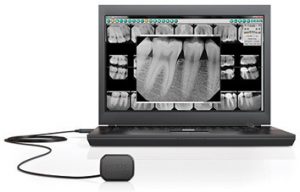
With digital radiography, specialized sensors have replaced traditional films. These sensors require much less radiation, and within seconds, high-resolution images appear directly on the computer monitor, providing superior clarity.
Intraoral Scanners:
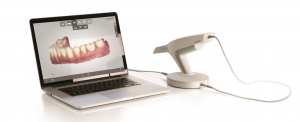
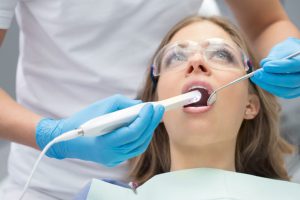
Traditionally, dental impressions were used to record the shape of teeth for crown fabrication. Since 2010, intraoral scanners have been introduced into dental practice, transforming impression-taking and crown design. These scanners are increasingly replacing conventional methods.
Advantages of Intraoral Scanners over Traditional Impressions:
- Much more comfortable for both patients and dentists, especially for patients with a strong gag reflex.
- Significantly higher accuracy in recording dental structures.
- Digital smile design and crown fabrication can be easily performed and presented to the patient immediately after scanning.