
What is Root Canal Therapy and When is it Needed?
First, it is important to note that the term Root Canal Therapy is the correct English translation, though it sounds more technical.
This treatment is required when a tooth begins to decay. In the early stages of decay, there are usually no noticeable symptoms, which is why everyone should have a dental check-up every six months. Early detection and treatment prevent the progression of decay.
If untreated, the decay gradually deepens, leading to symptoms. The first sign is usually sensitivity to sweet foods.
In other words, after consuming sweets such as sugar, honey, or dates, discomfort or pain may occur in the affected tooth. As the decay progresses deeper, sensitivity to cold foods or drinks develops, causing pain when consuming cold items.
When decay reaches the pulp, sensitivity to heat and spontaneous pain occurs. At this stage, the tooth requires root canal therapy to relieve the pain and restore function.
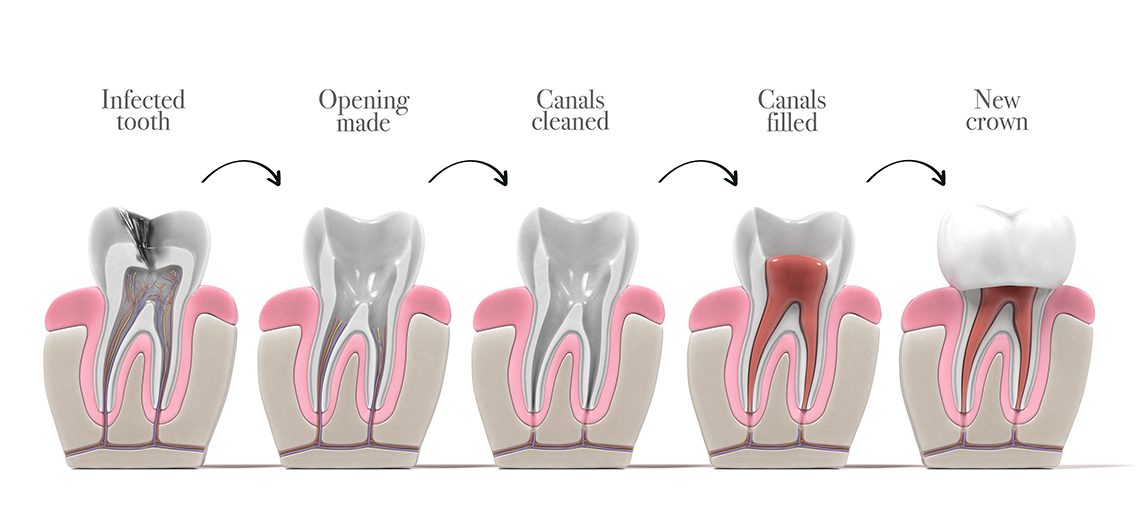
With precise and proper root canal treatment, the pain and sensitivity to hot and cold stimuli disappear. Occasionally, mild discomfort may persist for a few days after treatment, especially when chewing. This is normal, and in some cases, it may last up to two weeks. However, it is temporary, and full recovery is expected. Root canal therapy is one of the most reliable dental treatments, with nearly 100% success when performed correctly.
What is Retreatment or Re-Root Canal Therapy?
If the initial root canal treatment is not performed properly (for various reasons explained below), the treated tooth may develop infection, abscess, or pain months or even years later.
In such cases, re-root canal therapy may be necessary. Unfortunately, retreatment has a lower success rate, typically around 70–80%.
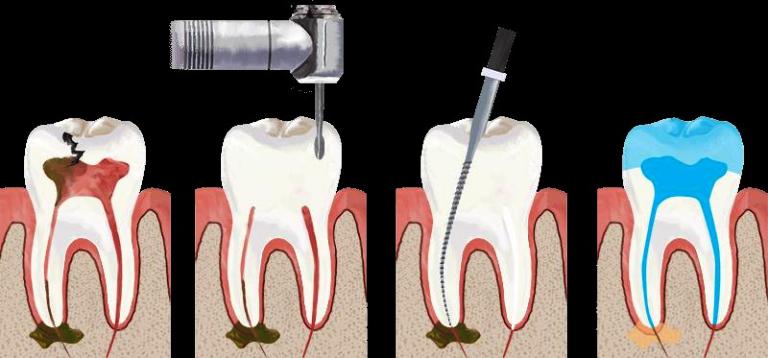
It is therefore crucial that the initial root canal therapy is done accurately and completely. Incomplete root canal treatment may occur due to: insufficient skill or experience of the dentist, complex root anatomy, or procedural complications.
When root canal treatment is performed precisely and followed by proper restoration or crown placement, the treated tooth can last for many years.
At our clinic, root canal procedures are performed by endodontic specialists to ensure the best outcomes. In modern dentistry, it is recommended that root canal treatments, especially complex cases, be handled by an endodontist.