
When a tooth is lost for various reasons, the empty space it leaves can cause both aesthetic and functional issues. This gap disrupts the alignment of your teeth and affects your bite, which is where dental prosthetics come into play.
Dental prosthetics not only restore the function of a missing tooth but also improve the overall appearance of your smile. In addition to enhancing chewing ability and smile aesthetics, dental prosthetics can reduce the risk of gum disease and relieve pressure on the jaw.
Categories of Dental Prosthetics
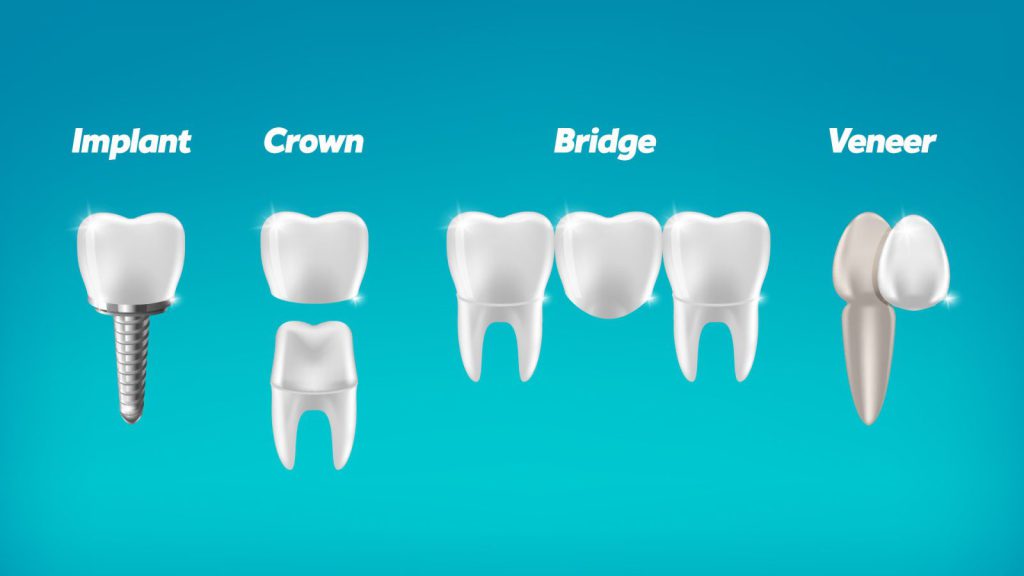
In general, dental prosthetics include treatments such as crowns, bridges, dentures, implants, and veneers. The most common classification divides prosthetics into fixed and removable types.
Partial removable prosthetics replace some, but not all, of your teeth. Fixed partial prosthetics, such as bridges and implants, are permanently installed in the mouth.
The choice of prosthetic type depends on how it will be used in the patient’s mouth, and the final decision is based on the dentist’s examination and diagnosis.
Dentures
Dentures are one of the most well-known types of dental prosthetics. They fit comfortably over the gums and look very similar to natural teeth.
The number of missing teeth and the dentist’s evaluation help determine the most suitable type of denture. Generally, there are three main approaches to using dental prosthetics.
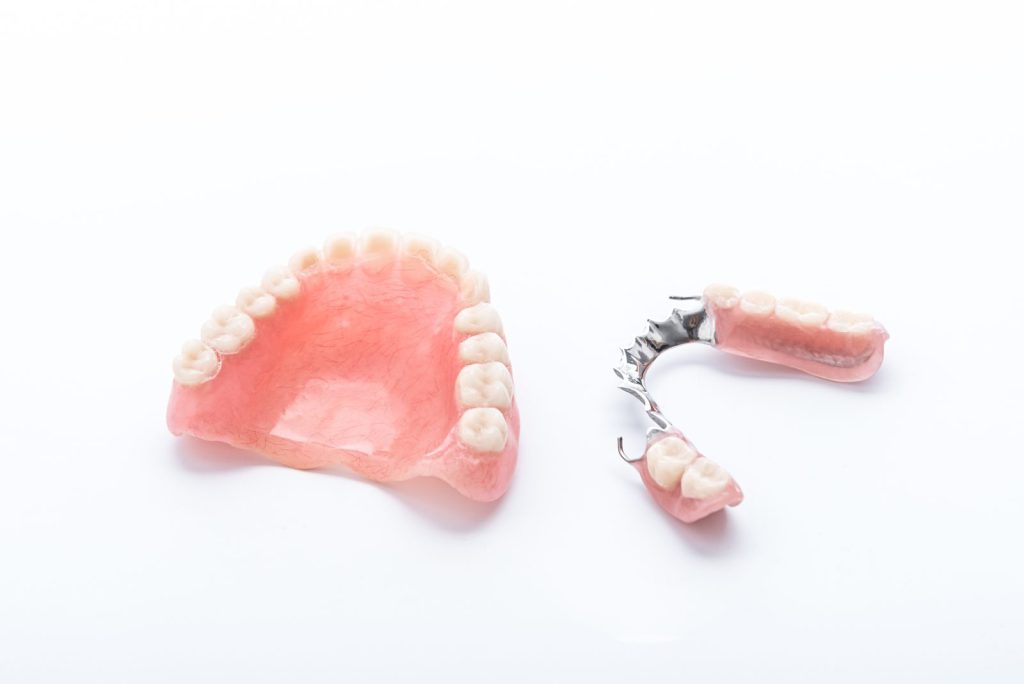
Removable dentures, the kind often seen in elderly homes, can replace all of your teeth or just some of the missing ones.
Partial Dentures
Partial dentures are a type of removable prosthetic, also known as segmental prosthetics, and can be further classified as:
- Full Acrylic Partial Dentures: A temporary solution, typically used for a limited period.
- Chrome-Cobalt Dentures: Used when a fixed prosthetic is not possible, particularly if there are no teeth at the end of the dental arch to support a bridge.
Overdentures
Another type of prosthetic, which can be considered semi-removable, is the implant-supported overdenture (Ordenture implant). In this method, a full set of teeth is placed on implant bases embedded in the gums, providing a more natural look and easier functionality.
Dental Implant Prosthetics
Implants are a type of fixed dental prosthetic and are considered the most effective method for replacing lost teeth. They have a base or fixture that is inserted into the jawbone and becomes stable as new bone material forms around it.
Implants are generally durable and reliable for tooth replacement. Although the success rate is about 97%, some cases may still experience failure or rejection.
Dental Bridges
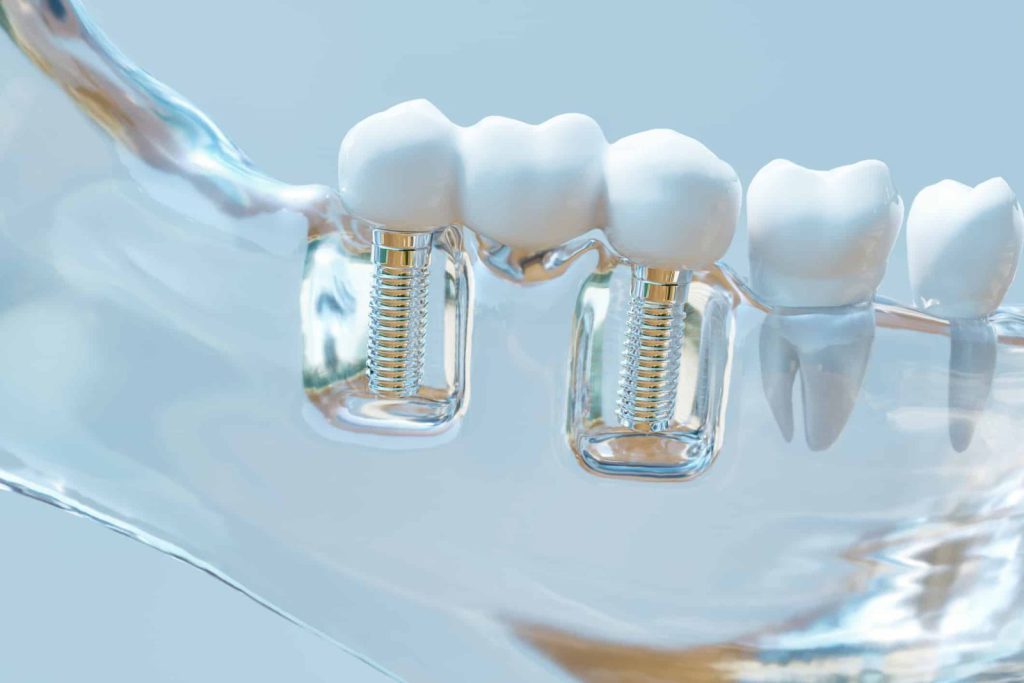
Another type of prosthetic is the dental bridge, which combines elements of dentures and implants. One limitation of bridges is that if a tooth in the middle is missing and a three-unit bridge is used, the two adjacent teeth must be prepared to support it.
A bridge typically connects to natural teeth on both sides and may include one or more artificial teeth called pontics. In some cases, bridges can also be anchored to implants for additional stability.
Crowns
Crowns are another type of dental prosthetic, used to cover damaged teeth. They can be made of metal, ceramic, or zirconia. Crowns provide a long-term solution for cracked or worn teeth.
Crowns are considered a relatively permanent solution, provided that proper restorative measures are applied to the damaged tooth. Once a crown is placed, it can last 5 to 15 years or longer with proper care. Regular brushing and flossing are essential to maintain it like natural teeth.
Durability and Longevity of Dental Prosthetics
If the first two weeks after receiving a dental prosthetic pass without complications, the prosthetic adapts to the mouth and can last a long time. The exact lifespan depends on the type of prosthetic.
Maintaining good oral hygiene, similar to natural teeth, is crucial for prolonging the life of your dental prosthetic.
Final Note
In this article, we explored what dental prosthetics are and the different types available. As mentioned, the selection of a prosthetic is based on a dental examination and the dentist’s recommendation.
For more information about dental prosthetics and other dental treatments, you can contact Dr. Mohammadreza Delaram’s clinic.